By Vishal, Digital Marketing Strategist — 6+ years of experience in paid media, SEO, and AI search visibility Last updated: July 2026
Important upfront note: ChatGPT advertising is not currently available to businesses advertising from India. OpenAI has rolled out its ads platform in phases — starting with the US, then Canada, Australia, and New Zealand, followed by the UK, Japan, and South Korea, with Brazil and Mexico added to where ads are shown to users. India has not yet been included in any wave of this rollout. This guide covers how ChatGPT advertising actually works right now, the best practices worth understanding in advance, and — most usefully for an Indian business today — what you can actually do in the meantime while access isn’t yet available here.
What ChatGPT Advertising Actually Is
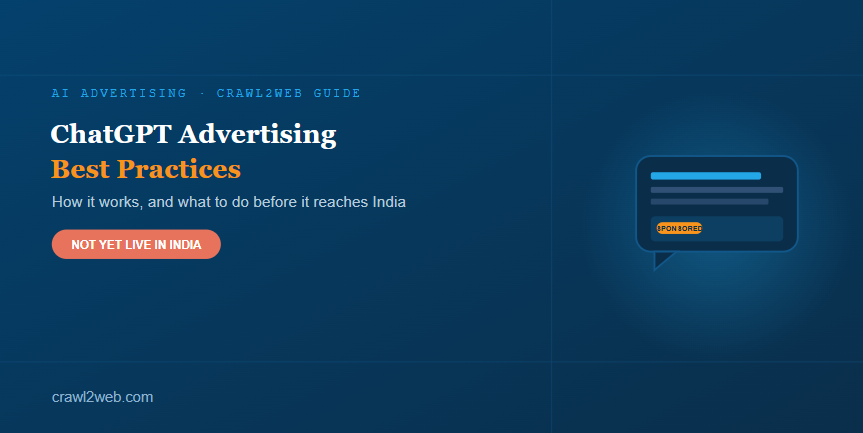
OpenAI launched a self-serve advertising platform (Ads Manager) that lets eligible businesses place ads directly inside ChatGPT conversations. Ads appear as a clearly labeled “Sponsored” block beneath ChatGPT’s regular, AI-generated answer — not blended into it. OpenAI has been explicit that ads do not influence the underlying answer ChatGPT gives; the ad is a separate, distinctly marked placement.
A few core mechanics worth understanding:
- Ads only appear to logged-in users on Free and Go (lower-cost paid) tiers. Anyone on Plus, Pro, Business, Enterprise, or Education plans doesn’t see ads at all — meaning the addressable audience is narrower than ChatGPT’s total user base.
- Targeting is contextual, not based on personal data or cookies. Ads are matched to the topic of the conversation itself, not a tracked profile of the user.
- The billing model is a cost-per-click auction, and the spend minimum has dropped dramatically since launch — from an initial $200,000 minimum buy down to effectively no minimum, with reported daily budgets starting as low as $25 in some markets.
- This is still an early, fast-evolving pilot. OpenAI itself has been cautious about publishing performance benchmarks, and the platform’s rules, eligible markets, and formats have already shifted multiple times since the initial launch.
Where ChatGPT Advertising Is Currently Available
As of this writing, advertiser access is limited to a small number of countries — reported sources place it at the US, Canada, Australia, and New Zealand as the earliest-confirmed advertiser markets, with the UK, Japan, and South Korea added as the rollout has continued. Ad display to users (as opposed to advertiser access) has additionally expanded into Brazil and Mexico. India is not part of either list. If your business is based in India, you cannot currently create an account on OpenAI’s Ads Manager, regardless of budget.
Best Practices — For When Access Reaches India (and for Managing Campaigns in Eligible Markets Now)
Even though Indian advertisers can’t act on this yet, understanding best practices now means being ready to move quickly once access opens up — and it’s directly relevant if your business works with clients or markets where ChatGPT ads are already live.
1. Treat it as a genuine test, not a core channel yet. With no published ROAS benchmarks from OpenAI and a platform this new, a controlled trial with a clearly defined budget and timeframe is a far more sound approach than shifting significant budget away from proven channels.
2. Lead with genuine relevance, not aggressive sales messaging. Because ads appear directly beneath a helpful AI answer inside a conversational context, overly promotional creative tends to feel jarring and out of place compared to how the same message might land in a traditional search ad.
3. Define a real conversion goal before launching, not just clicks. Given the format’s novelty, it’s tempting to measure success by click volume alone — a more useful bar is actual signed leads, orders, or bookings, tracked properly through to conversion.
4. Take advantage of the current low-competition window. Early industry commentary on the US rollout has described this period as something close to a land-grab, with thin competition and low costs relative to where the channel is likely to settle once more advertisers pile in — a dynamic worth watching closely for whichever market you’re operating in.
5. Keep paid and organic AI visibility working together. Ads only reach free-tier users and only appear on some conversations — they’re not a substitute for actually being the AI’s organic, unpaid answer. Both matter, and one doesn’t replace the need for the other.
What Indian Businesses Can Actually Do Right Now
This is the part that matters most for an Indian audience today: while paid ChatGPT advertising isn’t available yet, organic visibility inside ChatGPT’s actual answers already is — and it doesn’t require an ad account or a rollout announcement to start working on.
This is the core idea behind AI search optimization (AEO) and generative engine optimization (GEO): structuring your content so ChatGPT and other AI systems are more likely to reference, cite, or recommend your business directly inside a conversation — the exact placement paid ads are competing for, available today through organic strategy rather than a media budget. Businesses that build this foundation now will likely be in a stronger position once paid advertising does reach India, both because the organic groundwork tends to reinforce paid performance and because they won’t be starting from zero once the ad account waitlist opens.
In the meantime, paid search campaigns on channels that are actually available in India — Google Ads chief among them — remain the more immediately actionable paid option for driving similar high-intent traffic.
How to Stay Ready for the India Rollout
- Register interest directly with OpenAI through their advertiser sign-up form, so you’re notified as soon as India becomes eligible.
- Start AEO/GEO groundwork now rather than waiting, since organic AI visibility work has no eligibility restriction and compounds over time.
- Watch for the announcement pattern. OpenAI has consistently announced new markets in batches rather than one at a time — India joining alongside other large markets wouldn’t be surprising, but there’s no confirmed timeline as of this writing.
ChatGPT advertising is a genuinely new, fast-evolving channel — but not yet an option for India-based businesses. Rather than waiting passively, the more useful move right now is building the organic AI visibility foundation that will matter regardless of when paid access arrives, while keeping an eye on OpenAI’s rollout announcements so you’re ready to move the moment India is included.
Frequently Asked Questions
Can Indian businesses currently run ads on ChatGPT?
No — as of this writing, ChatGPT’s advertiser access is limited to a small number of countries (reported as the US, Canada, Australia, New Zealand, UK, Japan, and South Korea), and India is not among them.
When will ChatGPT advertising be available in India?
OpenAI hasn’t announced a specific timeline for India. The company has stated it plans to expand to “many more markets” by the end of 2026, but rollout dates for specific countries, including India, haven’t been confirmed.
Do ChatGPT ads appear for all users?
No — ads only appear to logged-in users on the Free and Go tiers. Users on Plus, Pro, Business, Enterprise, or Education plans don’t see ads at all.
Is there a way to reach ChatGPT users organically before paid ads launch in India? Yes — AI search optimization (AEO) and generative engine optimization (GEO) focus on getting a business cited or recommended directly inside ChatGPT’s organic answers, which isn’t restricted by country the way paid advertising currently is.
How much does it cost to advertise on ChatGPT in eligible markets?
Pricing has shifted significantly since launch — the original minimum spend requirement (reported around $200,000) has been removed, with some markets reporting daily budgets starting as low as $25 on a cost-per-click basis. Actual costs depend on the specific market and competition level.